Relevant Animation History
Stop Plastic Pollution (Paper stop motion animation)
In this first video, the animation is made by using stop motion and physical items such as paper and shells. They have used paper and paints for the background, fish and debris, and they have used real shells to spell out the text for the viewer instead of doing this with paper or digitally. This works well in context as it is using materials that are found in the ocean which links it to the subject of the animation. I think this animation is aimed towards children, because it uses stop motion and is hand crafted which would appeal towards children due to it feeling more juvenile. It is also quite a short animation, which would help keep younger people much more interested. There isn’t much text in this animation and it used just three words, which I think also shows this it is aimed towards children as it relies more on the visuals rather than text.
Plastic "Float"
This next animation is created digitally. Doing this allows for a much cleaner animation compared to before. In this animation, we start off by seeing a child, this makes me thinks that this animation is for children as it is using a character around their age, which is more relatable. However, because of details, I think this is for older children. Once we have seen the child, a plastic bag comes into frame and the child grabs a hold of the bag and fly’s out of frame with it. Next, we see the child flying with all the plastic in the sky. We then see a man throw his cup into the floating trash, this gives a message of that people do not care about where their waste ends up. We then see the little child fly towards the sunset with the trash which gives off a happy feeling at first, but then the child jumps off the plastic as it is flying into the ocean and we realise along with the child that it isn’t a good thing and it is harming the ocean. At this point the colours go from being warm to cold and dark. Then a message shows reading “Help us fight plastic pollution.” As we are left seeing in the background all the plastic go into the ocean.
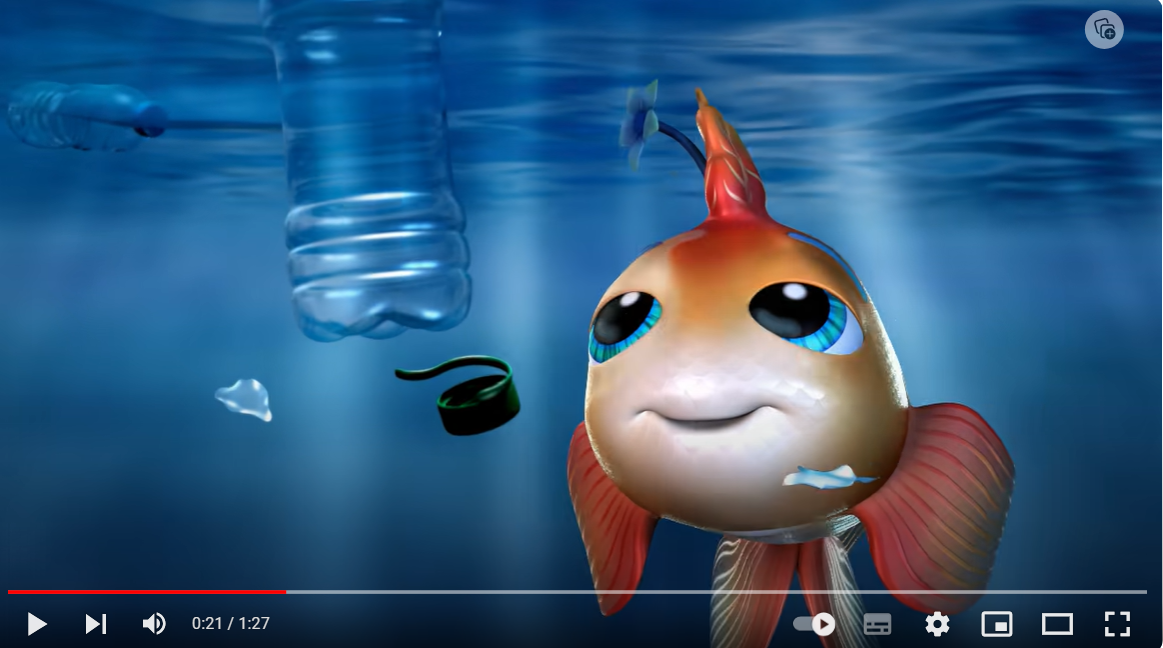
Blue Voice - Plastic Pollution in the Ocean -Animated Short Film - 3D Short Animation
This last animation is also made digitally. It begins with a view of the ocean, as a plastic bottle is dropped into frame. We then see a fish hiding at the bottom of the ocean as it sees the plastic bottles dropping in. The style of animation makes me think that this is aimed towards children, because it uses a small fish which shows emotions with its face, which is stylised and children usually like these type of animal characters. The fish then goes towards the plastic and we can see the microplastics floating around as the fish proceeds to eat some, before realising it isn’t food and spitting it out. After this, the fish starts gathering the plastic bottles and makes a fish with red crosses for eyes, signifying death. This is conceptual as it is using the plastic bottles to form a symbol associated with death and destruction, drawing a link between plastic bottles killing the sea life. The animation starts to turn black with only the red bottles staying in colour.
For my animation, I will use a digital style and keep the animation short to keep the attention span of my target audience, which is young children.
References:
Alex_StopMotion (2020) Stop Plastic Pollution (Paper Stop Motion) [Video] Available online: https://www.youtube.com/watch?v=0JKu9TQCLMI [Accessed: 10/02/2024]
Golbi Kh (2017) Blue Voice – Plastic Pollution in The Ocean [Video] Available online: https://www.youtube.com/watch?v=uRnFzZj4dVk [Accessed: 10/02/2024]
Plastic Change (2017) Plastic ‘Float’ [Video] Available online: https://www.youtube.com/watch?v=FiipFvHtMDE [Accessed: 10/02/2024]