To know the user needs, you need to know the users problem. The problem my users face are that they need a resource for art history links in web design, but there aren’t many adequate existing resources which cater to a large audience. According to Simplicable.com, user needs are defined as ‘a process of engaging users to understand their problems, goals, and preferences’ (Spacey, 2018).
Some common user needs include:
Efficiency
Accessibility
Convenience
Learnability
Stimulation
Visual Appeal
Information
So, if I use this list as a checkpoint for my website, I should already cover a lot of common user needs.
To do this, I can create a website design that is easy to learn, and provides sufficient information in a digestible format. I can also use visual elements such as colour, motion effects, and typography to create visual appeal and stimulation for the user. By doing this, I will be able to form a straightforward, enjoyable user experience which is effective for users of different abilities and preferences.
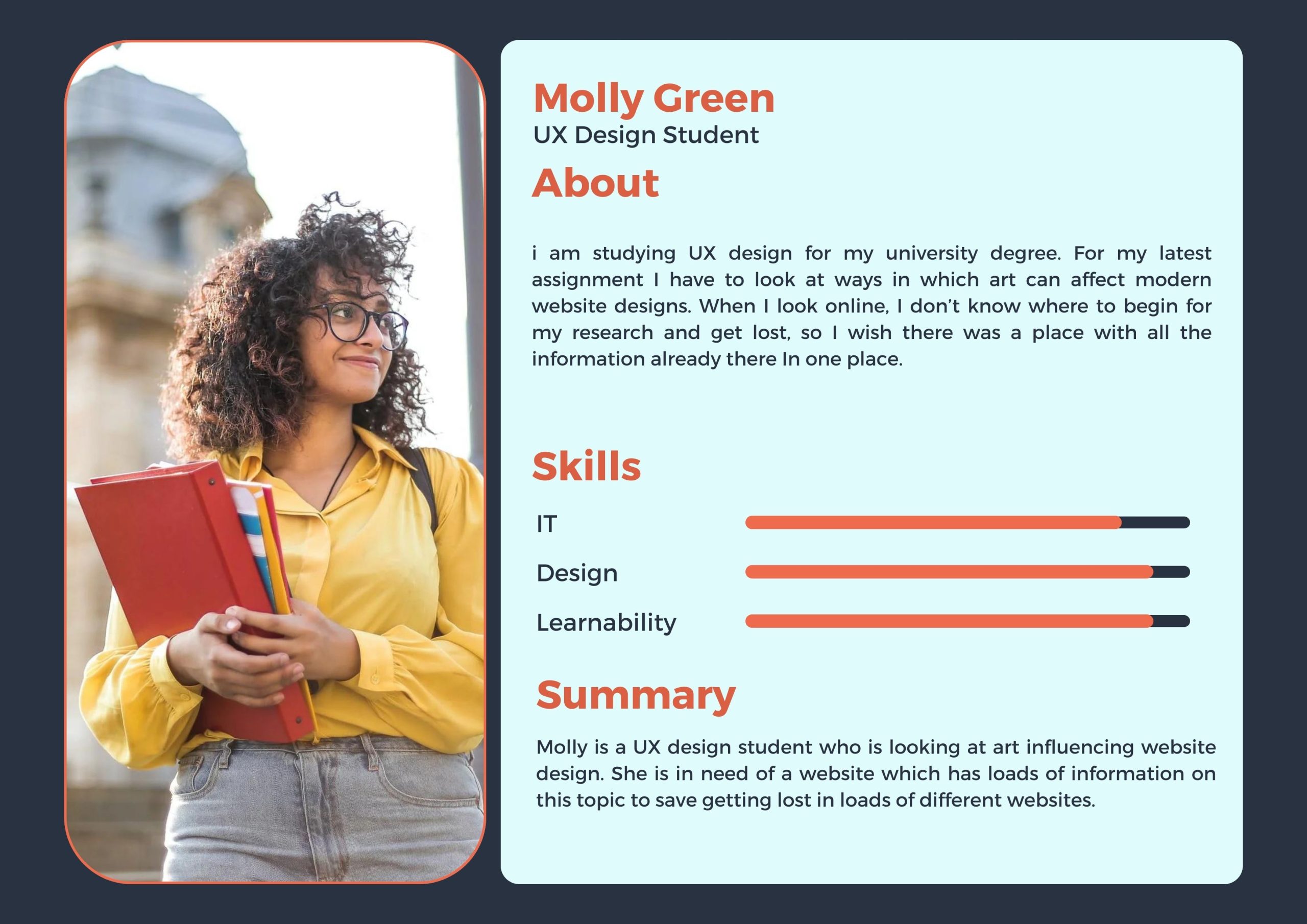
A user persona sheet for a student
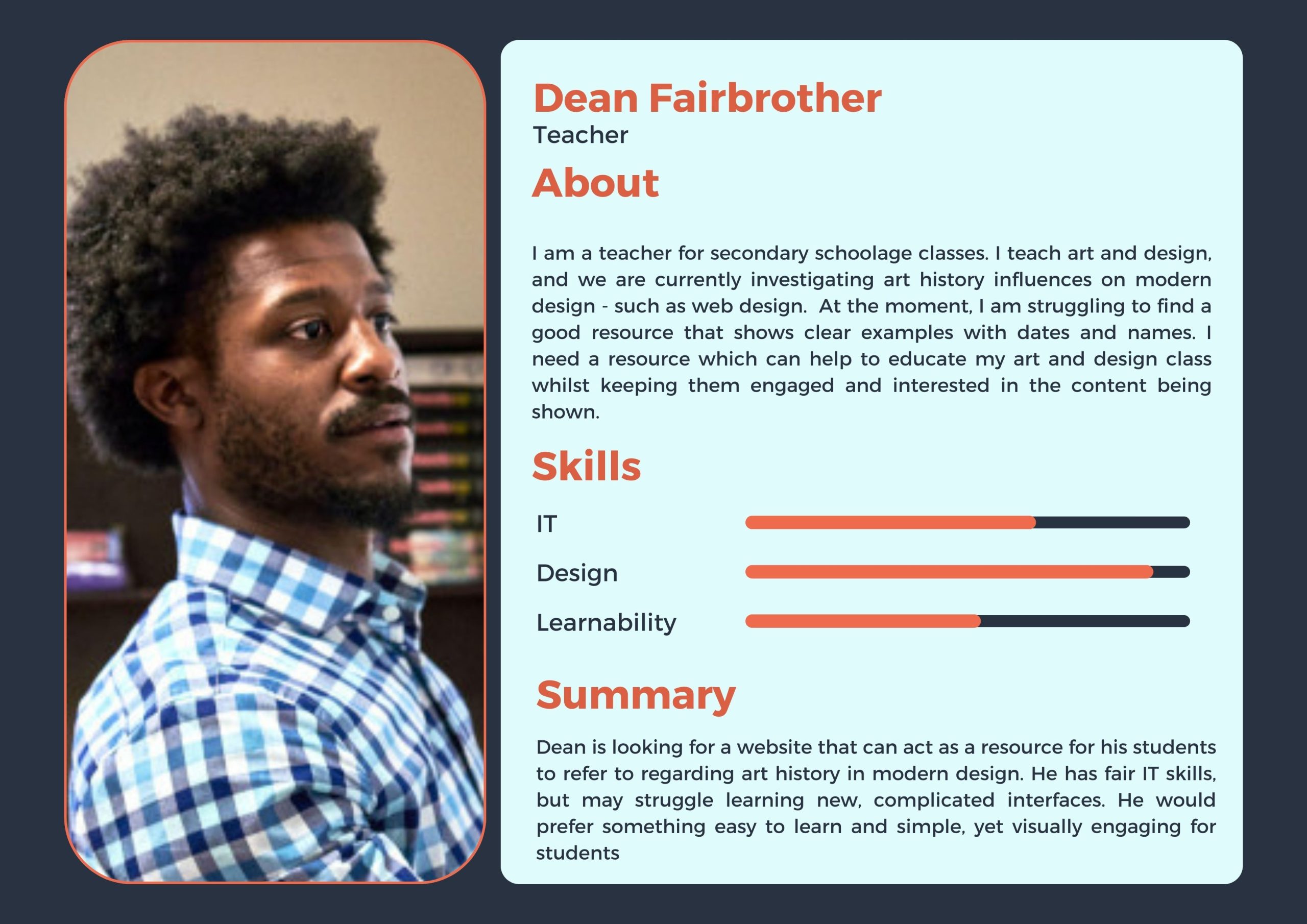
A user persona sheet for a teacher
As a way to help create a better understanding of the user needs, I have made some persona sheets which offer a more personal insight into the needs of the websites users. Using persona sheets can create context and humanises the users so that you can understand them better and connect more with their emotions and needs. Having this information down allows you to make more informed and design accordingly to their needs (UXDesignInstitute, nd)
User Journey
The user journey is the journey the user will take to reach their goal. The main goal of my website is to provide information to users, so their user journey should ideally lead to them finding this information.
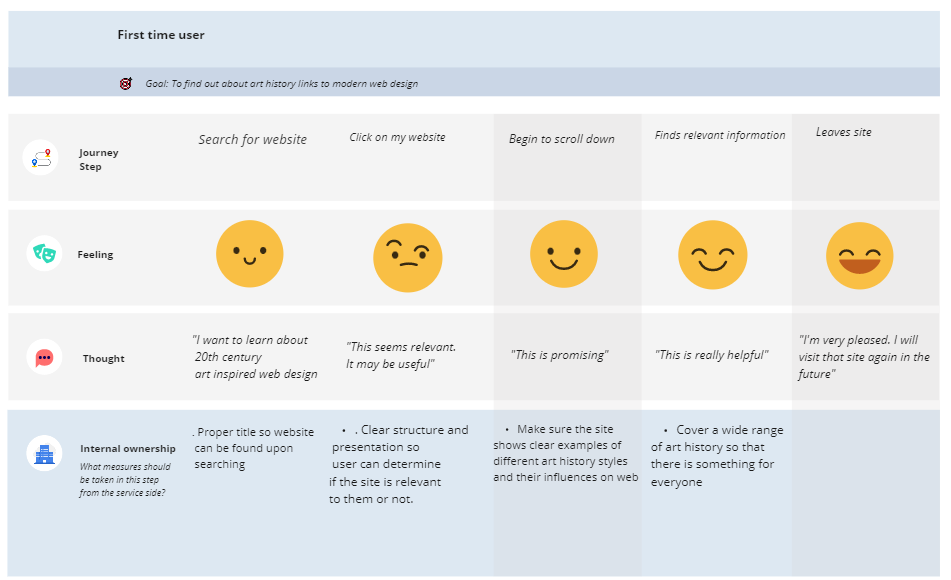
Here, I have mapped out my ideal user journey.
A user journey map for my website
The ideal user journey is simple. It begins with the user finding my site, scrolling through and then finding the information that is relevant to them and art history. Then they leave the website, happy and calm.
I need to make sure that this happens, so I need clear direction on my website, and I should avoid having too much crazy effects happening so that the user isn’t frustrated. I want my website to be quick and easy to use, so that it is the most convenient and helpful as it can be.
References:
Spacey, John (2018). 35 Examples of User Needs (Article). Available online: https://simplicable.com/design/user-needs [Accessed: 30.04.2023]
TeachInScotland (2023) Mathematics Teacher [Image]. Available online: https://teachinscotland.scot/secondary/mathematics/ [Accessed: 30.04.2023]
UniKit (nd) Student [Image]. Available online: https://www.google.com/url?sa=i&url=https%3A%2F%2Fwww.unikitout.com%2Fblogs%2Fstudent-info%2Feverything-you-need-to-know-to-prepare-for-university&psig=AOvVaw3fcBd3ByLskOpjB8ROAdpL&ust=1683671983903000&source=images&cd=vfe&ved=0CBAQjRxqFwoTCOjpi4bl5v4CFQAAAAAdAAAAABAE [Accessed: 30.04.2023]
UXDesignInstitution (nd) What are UX personas and what are they used for? [Article]. Available online: https://www.uxdesigninstitute.com/blog/what-are-ux-personas/#:~:text=A%20UX%20persona%20is%20a,and%20make%20design%20decisions%20accordingly. [Accessed: 30.04.2023]